You are standing beside an open bag the night before a trip. Shirts are folded. Chargers are scattered across the bed. Your passport has somehow disappeared beneath a jacket, and you are debating whether you really need a second pair of shoes.
You probably know what happens next.
Everything fits until it does not. You add one “just in case” item, then another, and suddenly your neat travel plan looks like a yard sale. You sit on the bag, pull the zipper around the corners, and promise yourself that next time you will pack more carefully.
But is packing really the problem?
Sometimes the bag is working against you. One deep compartment turns clean clothes, cables, toiletries, and electronics into a single confused pile. A pocket that looked useful online is impossible to reach at the airport. The shoulder straps feel fine for five minutes and punishing after fifty. Then, when you arrive, the large bag that carried your wardrobe is far too bulky for a walk around town.
Pakt approaches travel gear from a different angle. Instead of treating every bag as an isolated container, the brand designs backpacks, duffels, everyday bags, packing cubes, and removable organizers to work together. The result is less like owning a random collection of luggage and more like building a personal carrying system.
That may sound overly serious for a backpack. Then again, a good bag is a quiet travel companion. A bad one interrupts the trip every twenty minutes.
Minimalism is not about bringing almost nothing
Minimalist travel is often presented as a contest. Who can survive the longest with the smallest bag? Who can wear the same black T-shirt for twelve days? Who can fit an entire life into something that looks suspiciously like a school backpack?
That version of minimalism misses the point.
Packing lightly should not mean making yourself uncomfortable. It means removing duplication, choosing useful objects, and giving each item a logical place. A minimalist bag does not have to be empty. It has to be deliberate.
Pakt’s design language follows that idea. The bags look clean and understated, but the simplicity is mostly on the outside. Inside, the layouts focus on access, separation, and modular organization. There is room for clothing, technology, travel documents, and the small items that normally migrate to the bottom of a bag.
This balance matters. Too few compartments create chaos. Too many create a different problem: you forget where you put everything.
Have you ever searched six tiny zippered pockets for a charging cable, only to discover it was in your jacket? Organization should reduce thought, not create another memory test.
Pakt’s system uses larger functional areas, quick-access sections, packing cubes, and Clip-in Pouches that attach to interior daisy chains. You can assign a place to cables, toiletries, documents, or other small essentials, then move compatible pouches between different Pakt bags.
The aim is simple: when you need something, you should have a good guess where it is.
The suitcase that learned how to become a backpack
The Pakt One Travel Backpack sits at the center of the brand’s current travel system. It comes in 35L+ and 45L+ sizes. The smaller version expands from 35 to 40 liters, while the larger expands from 45 to 50 liters. Both have a suitcase-style opening rather than the narrow top access found on traditional hiking packs.
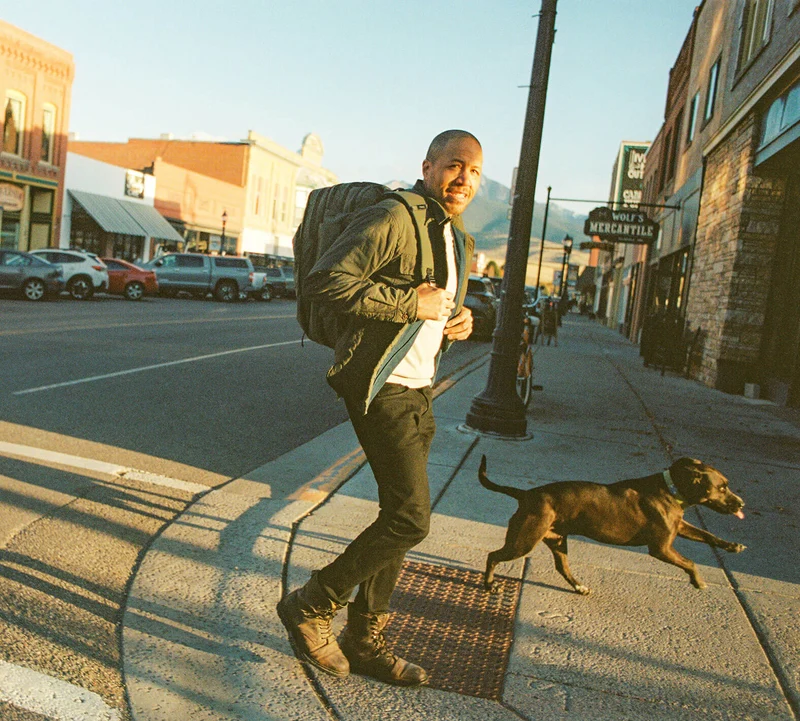
That clamshell layout changes how you pack.
Open it on a bed and you can see the contents instead of digging downward through layers. Clothing can occupy one area while equipment or packing cubes fill another. When you reach your destination, you do not have to remove half your belongings just to find the shirt packed at the bottom.
The backpack also includes a padded compartment for laptops up to 16 inches, an adjustable torso system, and removable support components such as a hip belt and sternum strap. Pakt describes both sizes as compatible with the carry-on requirements of most major airlines. Airline rules vary, however, and they can depend on the aircraft, route, ticket, and how fully the bag is packed. Always check your carrier’s current limits before leaving home.
Choosing between the two capacities is less about ambition than behavior.
The 35L+ makes sense if you prefer a tighter load, have a smaller frame, often use trains or budget airlines, or simply move more comfortably with a compact bag. The 45L+ gives you additional room for longer travel, bulkier clothing, work equipment, or the inconvenient truth that winter sweaters refuse to become small.
More capacity sounds attractive, but empty space has a habit of inviting unnecessary possessions. If you choose the larger bag, resist the urge to fill every corner simply because it exists.
A bag should carry your trip. It should not become the trip.
One-bag travel without using one bag all day
One-bag travel has an obvious weakness: the bag that works at the airport is rarely the bag you want at dinner.
A 35- or 45-liter backpack can carry your clothing and electronics through a terminal, but taking it to a café after check-in feels like bringing a wardrobe to buy an espresso. Travelers often solve this by stuffing a small day bag inside their main luggage. That works, although many packable bags sacrifice structure, protection, or a professional appearance to become tiny.
Pakt uses a more integrated solution.
The Pakt One Travel Backpack has an expansion area designed to hold a compatible MODE day bag. You can travel through the airport with the smaller bag nested inside the larger one. Before boarding, remove the MODE bag, place your main backpack overhead, and keep your laptop, passport, headphones, and other in-flight items under the seat.
At your destination, the MODE bag becomes your everyday carry.
It is a thoughtful transition because travel rarely has one mode. At 8 a.m., you are moving through security with several days of clothing. At noon, you need a laptop for work. By evening, you may only want a book, camera, bottle, and light jacket. Why force the same bag to handle every moment?
The MODE Convertible Bag has a 14-liter capacity and can shift between backpack and sling configurations. It includes padded sleeves for a laptop up to 16 inches and a tablet, an admin section for smaller essentials, a luggage pass-through, and attachment points for Pakt’s optional bottle sleeve and Clip-in Pouches. It is designed to fit inside the expansion compartment of either Pakt One Travel Backpack size.
For someone moving between airports, shared workspaces, client meetings, and city streets, that flexibility is more useful than a bag covered in dramatic tactical straps. Good travel design often looks boring until the exact moment you need it.

Then it feels brilliant.
Packing cubes: unnecessary until the first time they work
Packing cubes divide travelers into two groups. One group sees neat fabric boxes and wonders why anyone would put bags inside another bag. The other group has used them once and now packs as if every T-shirt needs an assigned seat.
The benefit is not mysterious. Cubes create categories.
You can keep tops in one, trousers in another, and socks or underwear in a smaller section. On a multi-stop trip, one cube can hold clean clothing while another gradually becomes the laundry zone. If airport security or a hotel-room repack disrupts your arrangement, you can move whole sections instead of rebuilding the bag item by item.
Pakt’s six-piece set is sized to work with the company’s travel backpacks. It includes two large cubes, two small cubes, one double-sided cube, and a stuff sack. The full set weighs nine ounces, so it adds structure without contributing much weight.
Cubes do not create extra physical space. They cannot negotiate with the laws of volume. What they can do is control shape and prevent small items from spreading into every gap.
Think of a kitchen drawer. Removing the dividers does not make the drawer bigger. It simply allows forks, knives, and spoons to become roommates with no boundaries.
There is also a psychological benefit. When each cube has a purpose, overpacking becomes easier to notice. If your clothing does not fit in the space you assigned, you have to make a decision instead of quietly expanding into the rest of the bag.
That little bit of discipline can be the difference between a comfortable carry and a backpack that feels like a bag of bricks.
The lighter route
Not every traveler wants a structured, full-featured pack. Some people care about reducing the empty weight before adding a single item.
That is where Pakt’s Cero system enters the picture.
The Cero Travel Backpack is positioned as the brand’s lightweight carry-on option. It pairs with Stash packable bags, including a 16-liter backpack, a 4-liter sling, and a 20-liter tote. Rather than nesting a more structured daily bag inside the main pack, you can bring a lighter secondary bag that occupies little room until needed.
This creates a useful choice.
The Pakt One system favors structure, organization, adjustable carry comfort, and a day bag that can function as a polished work companion. The Cero system favors a lighter base and packable accessories. Neither approach is automatically better. One is a fitted jacket; the other is a windbreaker.
Ask yourself how you actually travel.
Do you carry a laptop every day and move between professional settings? A structured MODE bag may earn its space. Do you leave most belongings at the hotel and spend the day carrying water, a camera, and a light layer? A packable Stash backpack could be enough.
Buying the most feature-rich option is not always smart. Features have weight, cost, and complexity. The right bag is the one whose features you use.
From Monday’s commute to Friday’s departure gate
Travel gear often spends more time in a closet than on a plane. That is why Pakt’s everyday collection matters.
The MODE range is meant to cross the line between daily work and travel. The 14L Convertible Bag can serve as a laptop bag, sling, or backpack. The 12L Shoulder Bag offers a more streamlined briefcase-style shape. The MODE Backpack provides a larger everyday option, while the Stash collection covers lighter, packable carry.
This makes the buying decision easier to justify because the bag does not need a boarding pass to be useful.
You can carry it to work, use it at a coffee shop, take it on the train, or bring it to a weekend event. When a trip arrives, it becomes part of the larger system rather than another item that has to be replaced.
That continuity is easy to underestimate. Familiarity reduces friction. You already know which pocket holds your keys, how the zipper opens, and where the charging cable lives. On a stressful travel day, those tiny certainties help.
Minimalism works best when the same object performs several jobs well. Not twenty jobs badly. Several jobs well.
A daily bag that also becomes your personal item and destination bag is a good example. It replaces multiple near-duplicates without feeling like a compromise.
Materials matter, but construction matters more
Travel products often rely on impressive-sounding fabric names. Denier counts, ballistic weaves, coatings, and proprietary textiles appear in the description, and shoppers are expected to translate them into one simple question: will this bag survive my life?
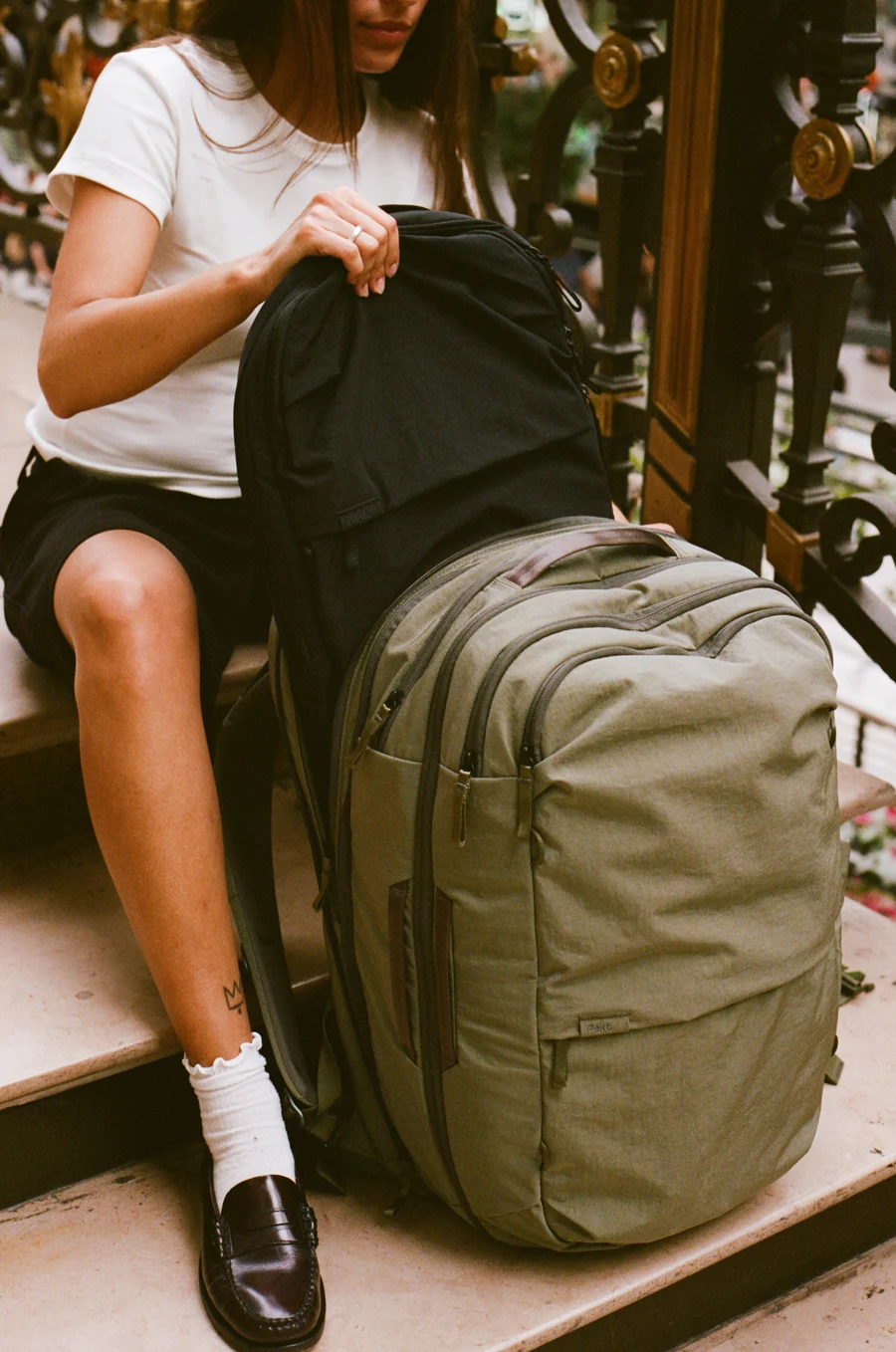
Pakt’s newer Pakt One and MODE bags use recycled nylon fabrics, including a 420D Recycled Nylon Wave exterior and a 210D recycled nylon interior. The exterior uses twisted filament yarn intended to improve resistance to everyday wear. Pakt also lists YKK zippers on the Pakt One Travel Backpack and a PFAS-free water-resistant coating on the MODE Convertible Bag.
Water resistant does not mean waterproof. A coating may help with light rain or an accidental splash, but it does not turn the bag into a dry box. If you expect heavy weather or carry sensitive electronics, use additional protection and follow the brand’s care instructions.
Pakt recommends spot cleaning certain current bags and warns that other washing methods may damage them or affect warranty coverage. That may sound less exciting than an adventure photograph, but it is exactly the information worth reading before an expensive bag meets a washing machine.
The company also states that its current gear uses recycled materials, comes in plastic-free packaging, and is produced in a Fair Trade Certified factory. Its product pages advertise a lifetime guarantee. Warranty terms can contain conditions and exclusions, so review the current policy for the exact product and destination before purchasing.
Durability is not only an environmental talking point. A bag you keep using avoids the cycle of buying a cheap replacement every few trips.
The honest trade-offs
Pakt gear is not aimed at someone looking for the lowest possible price. The brand sits in the premium travel category, and building a complete system with a main backpack, day bag, cubes, and pouches represents a meaningful purchase.
That cost can make sense if you travel regularly, use the daily bag between trips, and value integrated organization. It makes less sense if you fly once every few years and already own luggage that works.
There is also a danger in buying an entire system before understanding your habits. You may not need every cube, pouch, sleeve, and accessory. Start with the problem you actually have.
Does your current backpack hurt after an hour? Look closely at fit and harness adjustment.
Do small items disappear inside your bag? Consider pouches or packing cubes.
Do you hate carrying a large travel pack around your destination? A nested or packable day bag could solve that.
Do you consistently overpack? Buying a larger backpack may make the problem worse.
No bag can replace good judgment. The cleverest organizer still feels heavy when filled with things you never use.
Buy a bag for the trip you really take
Travel marketing loves distant peaks, empty beaches, and one-way tickets. Most trips contain less poetry. They include security lines, damp umbrellas, laptop chargers, train stairs, hotel elevators, and the urgent search for a passport you definitely placed somewhere safe.
That ordinary reality is where good gear proves itself.
Pakt’s appeal lies in its restraint. The bags do not need loud branding or dozens of external attachments to look capable. Their purpose appears in the way they open, the way smaller bags fit into larger ones, and the way accessories move through the same system.
You can choose a structured Pakt One setup for organized carry-on travel, pair it with a MODE bag for work and daily use, or take the lighter Cero and Stash route. Add packing cubes if they solve a real problem. Skip what you do not need.
That last part matters. Pakt sells systems, but thoughtful travel is still personal.
The goal is not to own more travel gear. It is to stop wrestling with the gear you own.
Imagine arriving at a station with your hands free. Your passport is in the pocket you expected. Your laptop comes out without disturbing your clothes. At the hotel, one small bag separates from the main pack and carries everything you need for the afternoon. No frantic repacking. No trail of loose cables across the room.
Nothing dramatic happens.
And that is the point.
The best travel bag does not become the story. It quietly removes the annoying parts, then lets the trip take over.